
Cannabis Terpene Testing Explained: What Lab Reports Reveal and How to Read Them
Terpenes are the aromatic compounds that give cannabis its signature scents and flavors. From citrusy limonene to earthy myrcene, these molecules play a key role in how a strain feels and tastes — including popular choices like the best terpenes for sleep, such as myrcene and linalool. But how can you know what terpenes are actually in your cannabis? The answer lies in lab testing.
Every cannabis terpene profile can be analyzed and quantified through professional lab testing, which provides detailed reports on the concentration of individual terpenes in a product. Understanding these reports empowers consumers to select strains based on aroma, flavor, and potential effects — not just THC or CBD content.
This guide explains how cannabis terpene testing works, what lab reports reveal, and how to interpret the data to make informed buying decisions.
Why Terpene Testing Matters
Terpene testing ensures that consumers know exactly what compounds are present in a cannabis product. Here’s why it’s important:
- Predict Effects: Different terpenes contribute to relaxation, focus, or mood enhancement.
- Flavor Assurance: Terpene concentrations influence aroma and taste.
- Product Consistency: Verified terpene profiles indicate quality control and repeatable experiences.
- Safety: Ensures no contamination from additives or synthetic terpenes in manufactured products.
How Cannabis Terpene Testing Works
Cannabis labs use advanced analytical methods to detect and measure terpenes, including:
- Gas Chromatography (GC): Separates and identifies individual terpenes in a sample.
- Mass Spectrometry (MS): Detects molecular weight to confirm terpene identity.
- High-Performance Liquid Chromatography (HPLC): Sometimes used to complement GC for terpene analysis in extracts and oils.
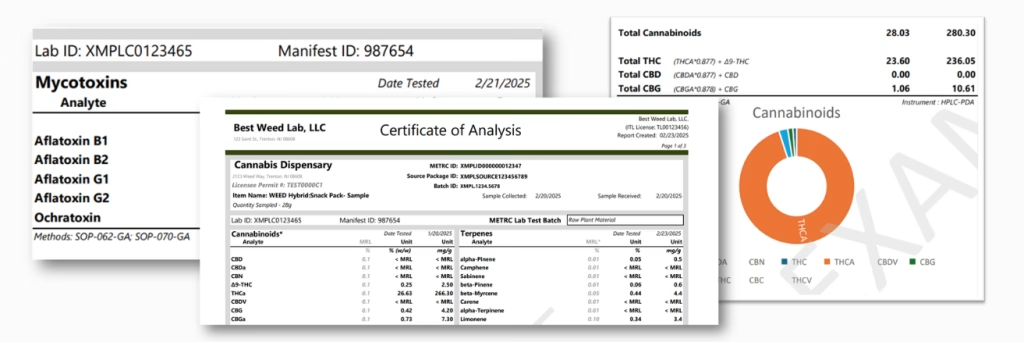
The result is a detailed report that lists each terpene present and its concentration, usually expressed as a percentage of total sample weight.
Understanding a Cannabis Terpene Lab Report
Lab reports typically include:
- Terpene Name – Common names like myrcene, limonene, pinene.
- Concentration (%) – Indicates how much of the terpene is present relative to total mass.
- Total Terpene Content – The sum of all terpenes, often expressed as a percentage.
- Dominant Terpenes – Highlights the top 2–5 terpenes driving aroma and effects.
Example Table from a Lab Report:
| Terpene | Aroma | Concentration (%) |
| Myrcene | Earthy, herbal | 1.2 |
| Limonene | Citrus | 0.8 |
| Caryophyllene | Peppery, woody | 0.5 |
| Pinene | Pine | 0.3 |
| Linalool | Floral | 0.2 |
This simple table allows consumers to predict aroma and effect before purchase.
Tips for Reading Terpene Lab Reports
- Look at dominant terpenes: The top two or three terpenes usually dictate aroma and effect.
- Check total terpene percentage: Higher total terpene content generally means stronger aroma and flavor.
- Consider product type: Flower, concentrates, and vape oils may list terpenes differently; vape oils often have added botanical terpenes.
- Verify lab credentials: Only trust third-party testing for accurate results.
Common Mistakes Consumers Make
- Ignoring terpene labels: Buying solely by THC/CBD content overlooks aroma and effect differences.
- Assuming higher percentages are always better: Extremely high terpene levels may be overwhelming or artificial in extracts.
- Confusing synthetic vs. natural terpenes: Some vape oils add botanical terpenes not derived from cannabis.
Why Cannabis Terpene Testing Helps You Choose the Right Product
By understanding lab reports, consumers can:
- Select strains based on aroma and effect goals.
- Avoid strains that might be too intense or too mild.
- Ensure quality and authenticity in purchased products.
- Match terpene profiles with personal preferences or therapeutic needs.
For example, if you want a calming experience, look for a myrcene-rich strain. If you want an uplifting effect, a limonene-dominant strain may be ideal.
Final Thoughts
Cannabis terpene testing is more than a scientific exercise, it’s a practical tool for choosing products that meet your expectations for flavor, aroma, and effect. By learning to read and interpret lab reports, you can make smarter, more confident decisions and enjoy a more tailored cannabis experience.
Understanding cannabis terpene profiles empowers you to go beyond THC and CBD percentages, ensuring a full-spectrum appreciation of the plant’s chemical complexity.