
Best Sports Knee Injury Prevention Tips & Exercises
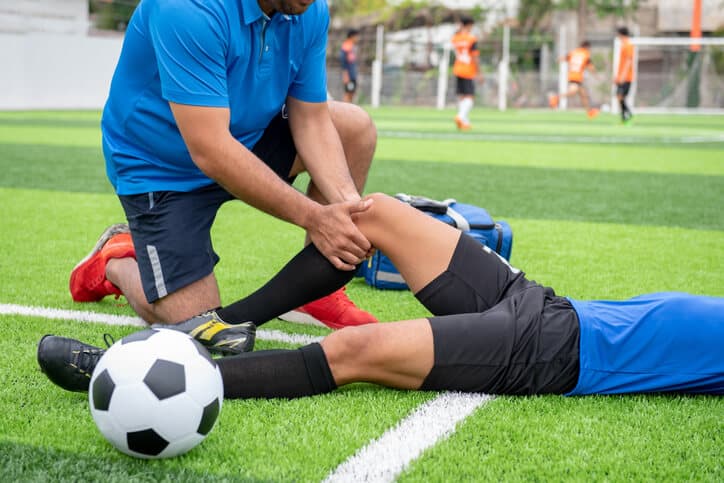
You’re mid-stride, focused on the finish line, turning to make a winning pass. But suddenly, a sharp pain in your knee brings everything to a grinding halt. In the world of sports, your knees are the ultimate shock absorbers, where each jump and sprint requires you to withstand forces that are several times your body weight.
However, they are also among the most vulnerable joints. Time has shown that “A chain is only as strong as its weakest link,” and for many athletes, that link is the kneecap.
Preventing a sports-related knee injury isn’t just about luck; it’s about a proactive strategy that combines structural support, muscular conditioning, and smart recovery. Whether you are a seasoned marathoner or a weekend warrior, understanding how to use a knee cap and performing the right drills can keep you on the field and out of the doctor’s office.
Why Your Knees Are at Risk During Sports
Most sports injuries occur during sudden deceleration, pivoting on a planted foot, or landing awkwardly from a jump. These movements put immense lateral and rotational stress on the ligaments (ACL, MCL) and the cartilage behind the patella.
If you already feel a dull ache after a game, you might be searching for the best knee cap for pain relief to manage the symptoms. This discomfort often stems from patellar tracking issues, where the kneecap doesn’t slide smoothly in its groove. Without a proper knee support, this friction leads to inflammation and long-term wear.
The Power of Proactive Support: Choosing a Knee Cap
In a country as active as ours, finding a knee cap for pain relief in India has become a top priority for athletes like you and across all levels. This is where you need to be extra cautious. This is because wearing a high-quality knee cap not only eases pain but also gives your body the compression and warmth it needs for that relieving comfort and recovery.
Proprioception: When you wear a knee support, it generally increases the brain’s ability to identify your joint’s position in space or on the ground. This biofeedback helps you subconsciously correct your form during high-speed play.
Stability: The best knee cap options are made to keep the patella region aligned, while reducing the risk of subluxation (partial dislocation) during movement.
Compression: Using a knee cap for pain relief helps manage minor swelling immediately after a match, preventing the joint from becoming stiff and prone to further injury.
Essential Exercises for Knee Support & Stability
You cannot rely on gear alone. To truly protect your joints, you must strengthen the muscles that surround them. Strengthening your natural knee support, your quads, hamstrings, and glutes, is the best way to avoid the sidelines.
1. Terminal Knee Extensions (TKEs): Using a resistance band, focus on the last few inches of straightening your leg. This targets the VMO (the teardrop muscle), which acts as the primary stabilizer for the kneecap.
2. Single-Leg Romanian Deadlifts: These build balance and hamstring strength, which is vital for protecting the ACL during sudden stops.
3. Wall Sits: A classic isometric hold that strengthens the quadriceps without putting too much stress on the joint. If you feel a little pain, wearing a knee cap for men or women can help you finish the set by giving you the compression you need.
4. Glute Bridges: Strong glutes prevent your knees from caving in (valgus stress) during squats or landings.
Gender-Specific Considerations in Knee Health
It is a biological fact that men and women face different risks. Due to a wider hip structure (the Q-angle), women are statistically more likely to suffer from ACL tears and patellar tracking issues.
Therefore, finding a specific knee cap for women that offers anatomical contouring is essential for female athletes. A knee cap for men, on the other hand, often has more muscle mass and needs a different tension profile to stay in place during high-intensity movement. So, make sure to consider the size and compression levels when looking for the best knee cap for your specific body type and needs.
Smart Habits to Prevent Injury
Beyond exercises and the best knee cap for pain relief, your daily habits dictate your injury risk.
Warm-Up is Non-Negotiable: Never jump straight into a game. Spend 10 minutes on dynamic stretching, lunges, leg swings, and high knees to wake up the joint.
Check Your Footwear: Worn-out shoes lose their arch support, causing your feet to over-pronate. This twist travels straight up to your knee.
Listen to the Ache: If you find yourself reaching for a knee cap for pain relief every single day, your body is telling you to rest. Overtraining is the fastest route to a chronic tear.
Navigating the Market: Finding Quality Support
When searching for a knee cap for pain relief in india, look for breathable, four-way stretch fabrics. The material should be sweat-wicking to prevent skin irritation during long matches. A good construction is what makes the difference between a device that helps and one that just bunches up behind your leg. You might need a simple sleeve for light jogging or a stronger knee support for heavy lifting.
In Summary
Your knees are the foundation of your athletic performance. By integrating targeted strength training with the structural benefits of a high-quality knee cap, you create a multi-layered defense against injury. No matter whether you are looking for the best knee cap to boost your confidence on the court or a specialized knee brace to address anatomical needs. The right support is always an investment in your longevity.
Don’t wait for a “pop” or a “click” to start taking care of your joints. Be proactive, stay disciplined with your exercises, and use reliable knee support to ensure that every game you play isn’t your last.